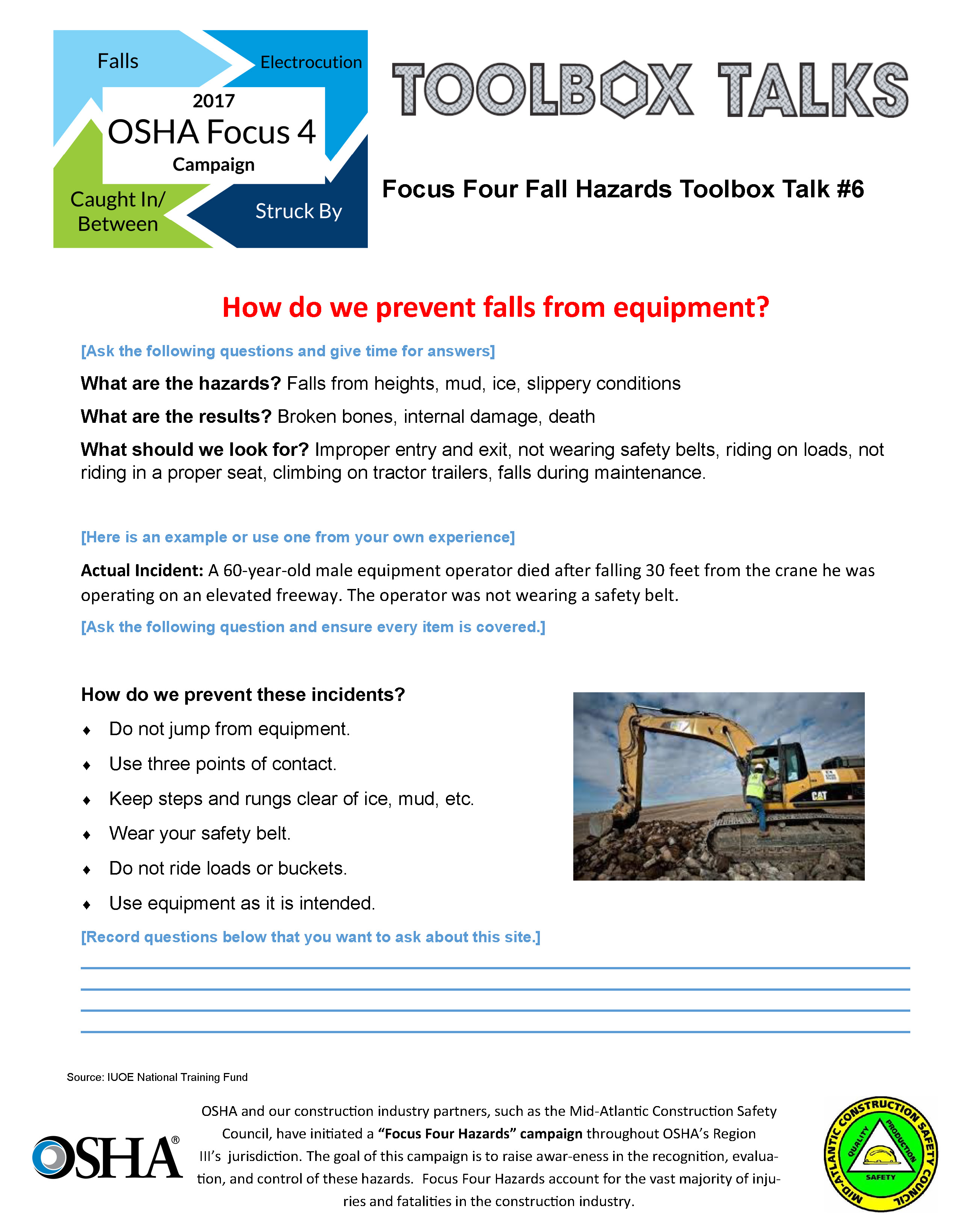
Most safety meetings fail before they start—not because people don’t care, but because they’re predictable, generic, or disconnected from real work. A toolbox talk that doesn’t reflect the day’s tasks, hazards, or team dynamics becomes background noise. Yet when done right, a 10-minute safety huddle built on relevant, free toolbox talk topics can prevent injuries, build accountability, and reinforce a culture of safety.
The good news? You don’t need a corporate training budget to run effective sessions. High-impact toolbox talks are available for free—if you know where to look and how to adapt them. This guide delivers actionable topics, real-world examples, and strategies to turn routine check-ins into meaningful safety conversations.
Why Free Toolbox Talk Topics Work (When Done Right)
Free doesn’t mean low value. In fact, many government agencies, trade associations, and safety nonprofits publish well-researched, field-tested toolbox talk materials—designed specifically for real-world application.
The key is curation and customization. A one-size-fits-all handout on "slips and trips" won’t resonate unless you connect it to your worksite: - Wet concrete on a formwork crew - Icy roof access in winter roofing - Loose gravel around excavation zones
Generic content fails because it skips context. Successful teams take free topics and make them specific—adding photos from their site, referencing near-misses, or inviting crew input.
Pro Tip: Always include the “Why this matters today.” For example: “We’re setting rebar overhead—today’s talk on struck-by hazards directly applies to the next three hours of work.”
10 High-Impact Free Toolbox Talk Topics (With Use Cases)
Not all topics are created equal. Prioritize those with high frequency, high severity, or recent incident trends on your site. Below are proven, freely available themes you can adapt immediately.
1. Hazard Recognition and Reporting Use Case: New crew members on a refinery turnaround. Many workers see hazards but don’t report them—fearing blame or delay. A focused talk reinforces that spotting danger is part of the job. - Show real photos of overlooked hazards (e.g., frayed hoist cable, blocked fire extinguisher) - Explain reporting pathways: app, supervisor, safety board - Discuss anonymity options if available
Common Mistake: Assuming people know how to report. Always walk through the process.
2. Working at Heights Use Case: Crew installing rooftop HVAC units. Falls remain the leading cause of construction fatalities. A pre-task talk should cover: - Proper harness fit and anchor points - Inspection of ladders and scaffolds - Weather impact (wind, rain)
Limitation: A 10-minute talk won’t replace fall protection training. Use it to reinforce protocols already in place.

3. Electrical Safety Use Case: Electricians prepping for panel upgrades. Focus on lockout/tagout (LOTO), voltage testing, and PPE. Bring a non-contact tester and demonstrate live/dead testing. - Stress: “Assume it’s live until proven dead” - Clarify arc flash boundaries and PPE levels
Real-World Moment: One team avoided injury after a talk reminded them to verify isolation—turns out the wrong breaker was labeled.
4. Hand and Power Tool Safety Use Case: Millwrights using grinders and impact wrenches. Often overlooked, hand tool incidents cause thousands of injuries yearly. Highlight: - Guard and trigger checks - Double insulation and grounding - Eye and hand protection
Workflow Tip: Do a quick tool inspection round after the talk—make it participatory.
5. Heat Stress and Hydration Use Case: Landscapers in early summer. Symptoms (dizziness, nausea) are often ignored until it’s too late. Teach workers to monitor each other. - Discuss acclimatization (new workers at higher risk) - Post hydration stations and rest schedules - Recognize early signs: headache, cramps
Data Point: OSHA reports 3,000+ heat-related incidents annually in construction.
6. Lifting and Manual Handling Use Case: Warehouse crews loading materials. Back injuries cost companies millions. Reinforce: - Team lifts for loads over 50 lbs - Proper stance: knees bent, back straight - Use mechanical aids (dollies, hoists) when available
Example: After a talk, a crew started using a hand truck for 60-lb conduit bundles—eliminating strain incidents.
7. Confined Space Awareness Use Case: Utility workers entering manholes. Even if formal entry isn’t planned, awareness prevents accidental exposure. Cover: - What defines a confined space - Oxygen deficiency risks - Communication and rescue plans
Critical Rule: No entry without atmospheric testing and a permit—period.
8. PPE Compliance and Inspection Use Case: General construction crews. PPE only works if it’s worn and functional. Use the talk to: - Inspect hard hats for cracks, UV damage - Check respirator seals and filter life - Reinforce site-specific rules (e.g., hearing protection in high-noise zones)
Common Gap: Workers wear hard hats backward—ensure suspension systems are correctly adjusted.
9. Fall Protection for Scaffolding Use Case: Painting crews on mobile scaffolds. Focus on: - Guardrail integrity - Proper leveling and locking of casters - Overreaching hazards
- Checklist: Run through a quick 3-point check:
- Are wheels locked?
- Are guardrails in place?
- Is the platform clear of debris?
10. Emergency Response Readiness Use Case: Remote site crews. When seconds count, knowing what to do matters. Review: - Location of AEDs, first aid kits, fire extinguishers - Evacuation routes and muster points - Emergency contact numbers posted

Pro Move: Do a 60-second drill—“If someone collapsed now, who calls 911? Who gets the AED?”
Where to Find Reliable Free Toolbox Talk Materials
You don’t need to create everything from scratch. Tap into trusted sources that offer downloadable, print-ready content.
| Source | Key Features | Best For |
|---|---|---|
| OSHA.gov | Official guidelines, bilingual materials | Compliance-focused teams |
| NIOSH | Research-backed topics, health hazards | Long-term risk reduction |
| CPWR (Center for Construction Research) | Construction-specific talks, PDFs | Trades and contractors |
| HSE UK (hse.gov.uk) | Clear, visual handouts | Teams needing simple messaging |
| Trade Associations (e.g., NECA, ABC) | Industry-specific scenarios | Electrical, plumbing, HVAC |
Caveat: Always verify alignment with local regulations. OSHA standards may differ from HSE UK guidance.
How to Customize Free Topics for Maximum Impact
A downloaded toolbox talk is a starting point—not the final product. Adapt it using these steps:
- Add Site-Specific Details
- Replace generic photos with real images from your jobsite. Example: Instead of a stock photo of a ladder, show the ladder model you use.
- Incorporate Recent Observations
- Mention a near-miss from the past week. “On Tuesday, we saw a worker almost trip on that cable—here’s how we prevent it.”
- Engage the Team
- Turn monologue into dialogue. Ask:
- - “What’s one hazard you’ve noticed this week?”
- - “Has anyone dealt with this before? How’d you handle it?”
- Link to Work Plans
- Tie the topic directly to the day’s tasks. “We’re doing overhead drilling—fall protection and head protection are critical.”
- Document and Follow Up
- Record attendance and discussion points. Follow up on action items:
- - “Juan will check all harnesses by noon.”
- - “Supervisor to verify guardrail on Scaffold B.”
Avoid These Common Toolbox Talk Pitfalls
Even with great topics, execution can fall flat. Watch for:
- Repetition Without Variation
- Talking about PPE every Monday gets stale. Rotate topics based on project phase and risk.
- One-Person Delivery
- Let different crew members lead occasionally. Builds ownership and fresh perspective.
- Ignoring Feedback
- If workers say a topic isn’t relevant, listen. Adjust the schedule to match real concerns.
- No Follow-Through
- Promising to fix a hazard but never doing it kills credibility. Close the loop.
“A toolbox talk isn’t complete until the action is taken.”
Make Safety Conversations Stick
The best toolbox talks don’t just inform—they involve, challenge, and connect. Use free topics as a foundation, but bring them to life with real stories, active participation, and clear next steps.
Rotate topics monthly based on your risk assessment. Combine free resources with on-the-spot observations. And always end with: “What’s one thing we’ll do differently today?”
Start tomorrow with a 10-minute talk on a high-risk task. Use a free template, customize it, and watch engagement rise. Safety isn’t about perfection—it’s about consistent, meaningful communication.
Frequently Asked Questions
Where can I download free toolbox talk templates? OSHA, CPWR, and HSE UK offer free, printable templates. Trade associations like ABC and NECA also provide member-exclusive content.
How long should a toolbox talk last? Ideally 5–10 minutes. Focus on one topic and keep it interactive.
Do toolbox talks need to be documented? Yes. Record date, topic, attendees, and key points. This supports compliance and tracking.
Can workers lead toolbox talks? Absolutely. Rotating leadership boosts engagement and develops safety ownership.
How often should toolbox talks happen? Weekly is standard, but increase frequency during high-risk activities or after incidents.
Are free toolbox talks OSHA-compliant? They can be—if they address relevant hazards and are documented. OSHA doesn’t require specific content, but does require hazard communication.
What if my team sees toolbox talks as a waste of time? Make them relevant. Use real incidents, involve the crew, and show how the talk prevents real harm.
FAQ
What should you look for in Top Free Toolbox Talk Topics for Workplace Safety? Focus on relevance, practical value, and how well the solution matches real user intent.
Is Top Free Toolbox Talk Topics for Workplace Safety suitable for beginners? That depends on the workflow, but a clear step-by-step approach usually makes it easier to start.
How do you compare options around Top Free Toolbox Talk Topics for Workplace Safety? Compare features, trust signals, limitations, pricing, and ease of implementation.
What mistakes should you avoid? Avoid generic choices, weak validation, and decisions based only on marketing claims.
What is the next best step? Shortlist the most relevant options, validate them quickly, and refine from real-world results.